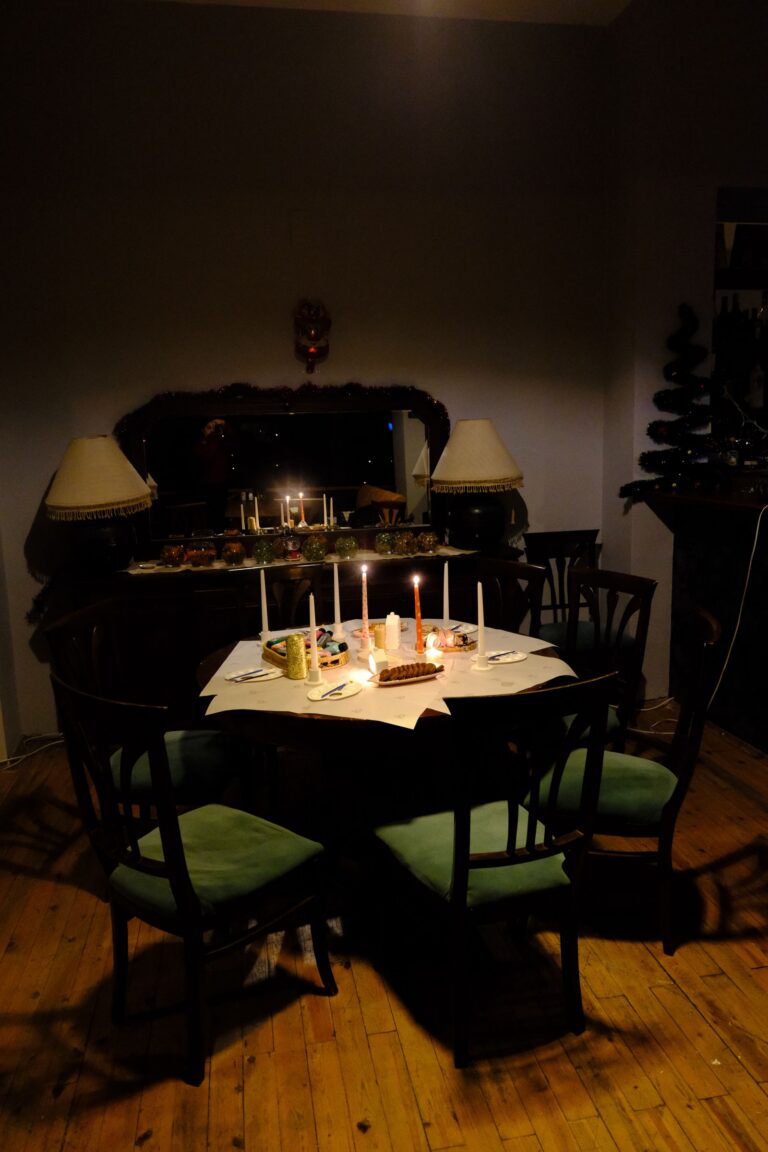
Depression and the Dark Night of the Soul
Part 4 of Faith and Counseling, a four-part series. Start with Part 1: Hope and Lament, Part 2: Anxiety and Trust, or Part 3: Marriage as Covenant, Not Contract if you haven’t yet.
The question underneath the question
When a Christian asks me “if my faith were stronger, would I still feel this way,” what they are usually really asking is: is my depression a spiritual problem? There is often a long history behind that question. Maybe someone suggested you pray more, read more, serve more. Maybe you have tried all of it. Maybe God feels silent, prayer feels like talking to the ceiling, and worship that used to move you now feels like watching other people feel something you cannot. Somewhere along the way, a quiet conclusion settled in: the problem must be me, and the problem must be my faith.
I want to address that directly: depression is not proof of weak faith. It is not a sign that God has left you, and it is not a sin you need to repent of. Some of the most faithful people in scripture and in church history walked through long seasons of darkness — and the tradition has language for it that most modern churches have forgotten.
This is the fourth and final post in a series on how faith and counseling meet. Depression is where we close.
Darkness is in the Bible, too
If depression were a failure of faith, scripture would be embarrassed by its own heroes.
Elijah, fresh off one of the most dramatic displays of God’s power in the Old Testament, collapses under a broom tree and asks to die (1 Kings 19). What God does next is worth noticing. He does not lecture Elijah. He does not correct his theology. He sends an angel with food and lets him sleep. Then he feeds him again and lets him sleep again. Only after rest and nourishment does God speak — and when he does, it is not in the wind or the earthquake or the fire, but in a quiet whisper.
Psalm 88 is the darkest prayer in the Psalter, and it is the only lament that does not resolve. It ends with the words darkness is my closest friend. It is in the Bible anyway. That alone says something: God made room in his own book for a prayer that never gets to the hopeful part.
Church history tells the same story. Charles Spurgeon, one of the most celebrated preachers of the nineteenth century, wrote and spoke openly about crushing bouts of depression throughout his ministry. Mother Teresa’s private letters, published after her death, revealed decades in which she felt almost no sense of God’s presence — while she kept serving the poor every day. Neither was a failure of faith. Both were faithful people carrying something heavy.
What the “dark night of the soul” actually means
The phrase comes from St. John of the Cross, a sixteenth-century Spanish Carmelite, who wrote about a season in the spiritual life when the felt sense of God’s presence falls away — prayer goes dry, old consolations stop working, and the soul is led through a kind of darkness it cannot navigate by its own light. For John, this was not punishment. It was a deepening — God working beneath the level of feeling, loosening our grip on the experiences we had mistaken for God himself.
That is a beautiful and important idea. It is also one that gets misapplied.
Depression and the dark night are not the same thing
Psychiatrist Gerald May, in his book The Dark Night of the Soul, made a careful and helpful distinction between the two. They can look similar from the outside, and they can overlap. But they are not identical.
A dark night, in the classical sense, tends to leave a person’s basic functioning and sense of self intact. Prayer feels dry, God feels distant, but there is often a strange underlying peace or rightness about it, and the person does not usually lose their capacity for life.
Depression is different. It tends to affect the whole person — sleep, appetite, energy, concentration, the ability to enjoy anything at all. It often brings self-loathing, hopelessness, and a sense that you are a burden to others. It is something happening in your body and brain as much as in your spirit, and it responds to treatment.
Here is why the distinction matters: if you are clinically depressed and someone tells you it is “just a dark night,” you may wait years for a spiritual season to pass when what you actually need is care. And if you are in a genuine dark night and someone tells you it is depression, you may miss what God is doing in it. Often, honestly, it is some of both. Telling them apart is not something you should have to do alone.
Getting help is not a lack of faith
I want to say this plainly because many Christians need to hear it from someone they trust: seeing a counselor for depression is not a spiritual failure. Neither is taking medication, if you and your physician decide that is right for you. Elijah needed food and sleep before he could hear God’s whisper. Your body is part of how God made you, and caring for it — including your brain chemistry — is not the opposite of trusting him. It is stewardship.
Where IFS meets faith in the darkness
Throughout this series, I have drawn on Christian therapist Jenna Riemersma’s integration of Internal Family Systems with Christian faith — specifically her understanding of the IFS concept of Self as the Imago Dei, the image of God at the core of every person.
That framing matters enormously in depression, because depression is so often driven by parts. There may be a part that has gone heavy and still to protect you from more pain. A part that carries old shame and keeps telling you that you are worthless. A part that has given up hoping because hoping hurt too much the last time. These parts are not your enemies, and they are not evidence that God has abandoned you. They are wounded, exhausted parts of you that have been carrying more than they were ever meant to carry.
One of the most important things I see happen in this work is when a depressed Christian discovers that the image of God in them was never actually gone. It was buried under the weight those parts were carrying. As the parts are met — gently, with compassion, without being told to cheer up — that core presence begins to come back into view. Clients often describe it not as God returning, but as realizing he had never left.
What Christian counseling for depression looks like
In the room, the work blends the clinical and the spiritual as naturally as the client wants it to. We use evidence-based approaches — Cognitive Behavioral Therapy to interrupt the thought patterns that keep depression in place, IFS to meet the parts carrying the heaviness. And when it is meaningful to you, we bring your faith into it: lament, prayer, scripture, and the long tradition of believers who have walked through darkness before you.
You do not have to choose between your faith and your mental health. You do not have to pretend to be further along than you are. You only have to be honest about where you are — which, it turns out, is exactly what the Psalms have been inviting you to do all along.
If you are in crisis
If your depression includes thoughts of not wanting to be alive, please reach out now — call or text 988 to reach the Suicide and Crisis Lifeline, or call 911. That is not a failure of faith either. It is the next right step.
Ready to take the first step?
If you have been carrying depression quietly inside your faith — wondering if God is gone, wondering if you are the problem — that is worth paying attention to. The darkness is real. So is the presence that, as the Psalmist says, finds even darkness not dark to him.
I offer a free 15-minute phone consultation so we can talk about what is going on and whether I am the right fit. No pressure — just a conversation. You can email or call me at (864) 881-2329.
Learn more about depression counseling at Olive Tree, or reach out through the contact page to get started. You may also want to read High-Functioning Depression: When You Look Fine and Feel Empty.
Read the rest of the series
Part 1: Hope and Lament: A Christian Way Through Grief
Part 2: Anxiety and Trust: When “Cast Your Cares” Isn’t Enough
Part 3: Marriage as Covenant, Not Contract