
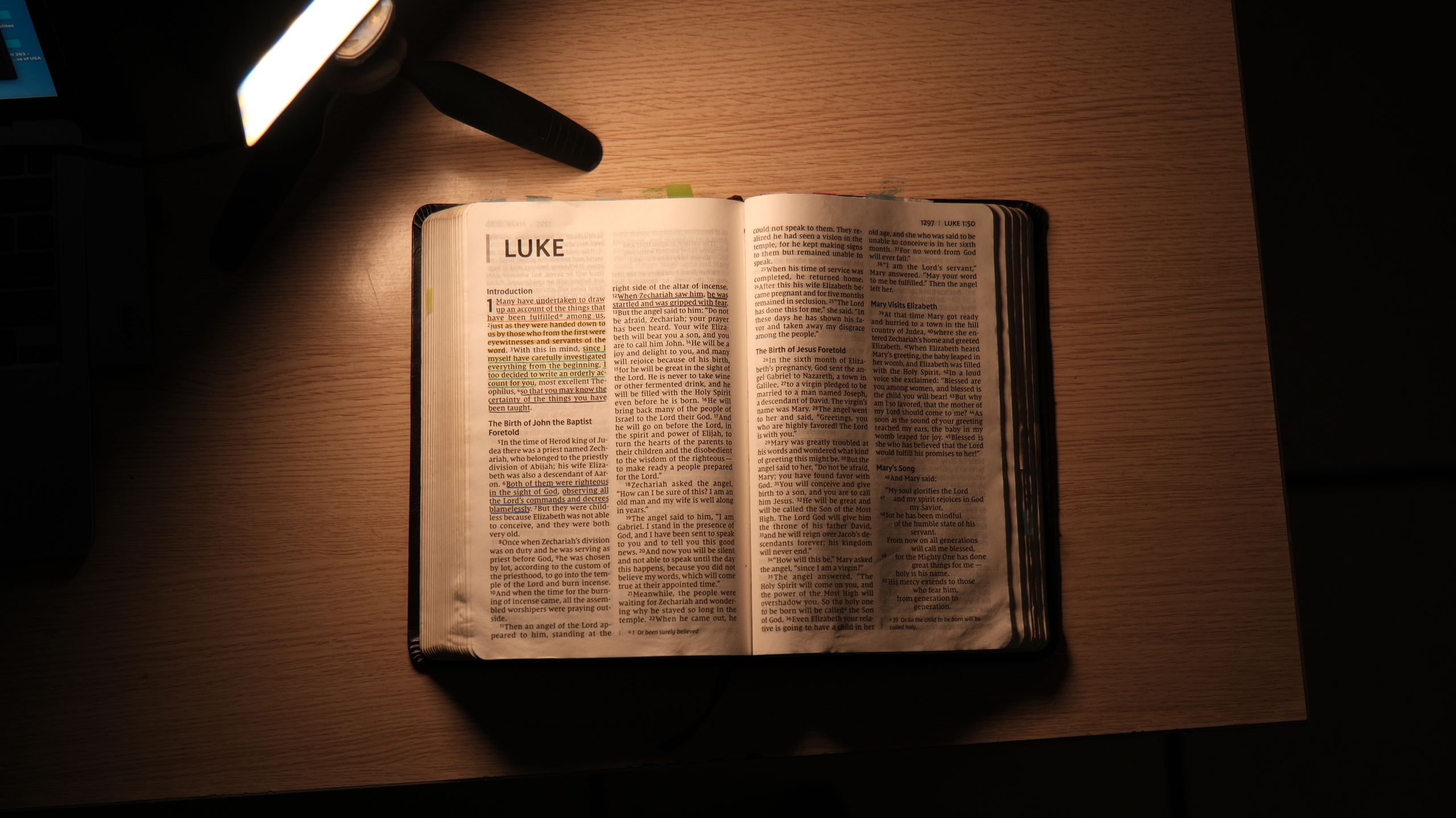
Anxiety and Trust: When “Cast Your Cares” Isn’t Enough
Part 2 of Faith and Counseling, a four-part series. Start with Part 1: Hope and Lament — A Christian Way Through Grief if you haven’t yet.
The question underneath the question
When a Christian asks me “why can’t I just trust God with this,” what they are usually really asking is: what is wrong with my faith? You know the verses. You have quoted them to yourself and to others. “Cast all your anxiety on him, because he cares for you.” “Do not be anxious about anything.” “Consider the lilies.” And yet, at three in the morning, the anxiety is still there — the same worry cycles, the same tightness in your chest, the same forecasts running whether you have prayed or not. Somewhere in the middle of that, you have probably concluded that the problem is you.
I want to address that directly: what you are experiencing is not a defect of faith. It is not proof that you do not really trust God. It is not something a stronger belief would fix. In fact, the way those verses have been used to shame anxious Christians — often gently, often unintentionally, often by people who love them — is one of the more common ways I see faith and anxiety collide in the therapy room. And the collision usually leaves the anxious person feeling worse, not better.
This is the second post in a series on how faith and counseling meet. Anxiety is a natural next place to go.
The verses, read again
The verses most often quoted at anxious Christians are worth looking at again, in context.
“Cast all your anxiety on him because he cares for you” (1 Peter 5:7) is not a command to feel less anxious. It is an invitation into relationship. The Greek verb behind “cast” is one of throwing — throwing your anxiety toward God, not throwing it away. The verse assumes you have anxiety. The whole point is what you do with it. Peter is not saying you should not feel it. He is saying you should not carry it alone.
“Do not be anxious about anything, but in every situation, by prayer and petition, with thanksgiving, present your requests to God” (Philippians 4:6) is the same shape. It is not a demand that you feel calm. It is an invitation to bring your anxiety into a specific kind of conversation. Paul is writing this from prison, by the way — and later in the same letter he tells us plainly that he has learned contentment. Meaning it was not automatic. Meaning it took time. Meaning he too had to be taught.
“Consider the lilies” (Matthew 6) is often quoted as if Jesus is scolding anxious people. Read the whole passage. He is speaking with real tenderness to disciples he knows are worried about food and clothing, in a subsistence economy where those worries were rational. He is not shaming them. He is inviting them to see something bigger than their fear.
The verses are not the problem. What has been done with them often is.
Anxiety is all over scripture
If anxiety were a defect of faith, the Bible would look very different than it does.
David, whose name for God is my shepherd, describes his own fear repeatedly. His enemies surround him. He cannot sleep. He waters his couch with his tears. He questions God. He is called a man after God’s own heart anyway.
Paul, who wrote most of the New Testament, describes a “thorn in the flesh” he pleaded with God three times to remove and never got the answer he wanted. He describes weeks of despair in Asia so heavy he despaired of life itself (2 Corinthians 1).
And Jesus himself, in the garden of Gethsemane the night before his death, is described as being in such distress that his sweat became like drops of blood. He asks the disciples to stay with him. He asks the Father, three times, to take the cup away. He does not perform composure. He is fully in the human experience of terror, and it does not disqualify him from being who he is.
If Jesus can be that anxious and be Jesus, you can be that anxious and be a Christian.
Anxiety as a signal, not a sin
In an earlier series on anxiety, I described anxiety not as a malfunction but as a part of you doing a job. In Part 1 of that series, I called this part the Analyzer — the vigilant, forecasting, protective part of you that has been running, often since childhood, to keep you safe from things it did not want to happen.
That framing does not compete with a Christian understanding of anxiety. It deepens it. Your anxious part is not the enemy of your faith. It is a part of you that has been trying to protect you, using strategies it learned before you had the resources to know any other way. It is a part in need of care, not condemnation. It is precisely the kind of part scripture describes God moving toward, not away from.
The trouble is that most anxious Christians have been treated to a kind of theology that lands more like stop feeling this than bring this. When “cast your cares” has been used to mean “hide your cares, buck up, believe harder,” anxious Christians tend to do exactly that — until the anxiety, denied the room it needs, either explodes or becomes chronic and quiet and shame-lined.
Real casting requires bringing. You cannot cast something you have not first acknowledged you are carrying.
Where IFS meets Christian faith, again
In Part 1 of this series, I mentioned Christian therapist Jenna Riemersma’s work on integrating Internal Family Systems with Christian faith. Her core move — that the IFS concept of Self is best understood as the Imago Dei, the image of God in us — is especially useful here.
If the anxious part of you is a scared, hardworking, often young part trying to keep you safe, then the healing move is not to shame that part into silence. It is to bring the presence of God — inside you, at the core of you, as the Imago Dei — toward that part. To sit with the anxious part not as an enemy but as a scared child being met by a compassionate adult, and to invite God’s presence into that meeting. That is how casting your cares actually happens. Not by pretending the anxious part is not there. By bringing it — and being brought by it — into the presence of a God who knows what it is to be terrified.
Most of my Christian clients find that this reframe changes their relationship with their anxiety more than any amount of trying-to-trust ever did.
What this looks like in the room
In the therapy room, the work usually blends the two languages naturally. We meet the anxious part, in the IFS way, and we invite the client’s own theological resources — prayer, scripture, sacrament, silence — into the meeting. Sometimes clients pray with a part they had never known was there. Sometimes they realize a part of them has been furious with God for years, and getting to say so out loud is the first honest conversation they have had with him in a long time. Sometimes they discover the part they were most ashamed of is the part God has been reaching for all along.
None of that is a shortcut. The Analyzer does not stand down in one session. But over time, the parts settle. And the settling makes room for what scripture calls the peace that surpasses understanding — which turns out to be less like the absence of anxious parts and more like what it feels like when they are finally held.
What comes next in this series
In Part 3, I will look at marriage as covenant, and what that framing changes about how Christians handle conflict, repair, and long-term commitment.
In Part 4, I will look at depression and what the mystics called the dark night of the soul — and why depression is not always a spiritual failing, even when it feels like one.
Ready to take the first step?
If your anxiety has felt lonely inside your own faith — if you have been quietly wondering why you cannot just believe your way out of it — that is worth paying attention to. There is a way for your anxiety and your faith to be in the same room without one of them shaming the other.
I offer a free 15-minute phone consultation so we can talk about what is going on and whether I am the right fit. No pressure — just a conversation. You can email or call me at (864) 881-2329.
Learn more about anxiety counseling at Olive Tree, or reach out through the contact page to get started.
You may also want to read The Anatomy of Anxiety — the first post in my broader anxiety series, where I introduce the IFS framing this post builds on.


